
Dust off your foraging basket (or just your weekly shopping list)—National Wild Foods Day arrives on October 28th! For this week’s Work-in of the Week, we’re tapping into nature’s untamed larder to give our typical office lunches a fresh, nutrient-dense upgrade. Our bodies evolved on uncultivated, seasonal plants, and research shows that rich dietary diversity can boost cognitive performance and daytime alertness by up to 20%.
You don’t have to wander deep into the woods at lunchtime to take part, either. Try adding one of these two wild staples to your workday this week:
Wild blackberries (or rosehip tea): Wild berries pack up to 50% more antioxidant polyphenols and vitamin C than standard cultivated varieties, helping buffer against oxidative stress and afternoon brain fog.
Roasted sweet chestnuts: Unlike oily nuts, chestnuts are rich in complex, slow-burning carbs and prebiotic fibre. They offer steady glucose delivery to your brain, sidestepping the classic 2 PM slump.
Weaving these into your routine is an easy, low-effort way to diversify your gut microbiome and stay energised right through the end of your to-do list.
Work in of the week - The standing meeting, 15-20mins
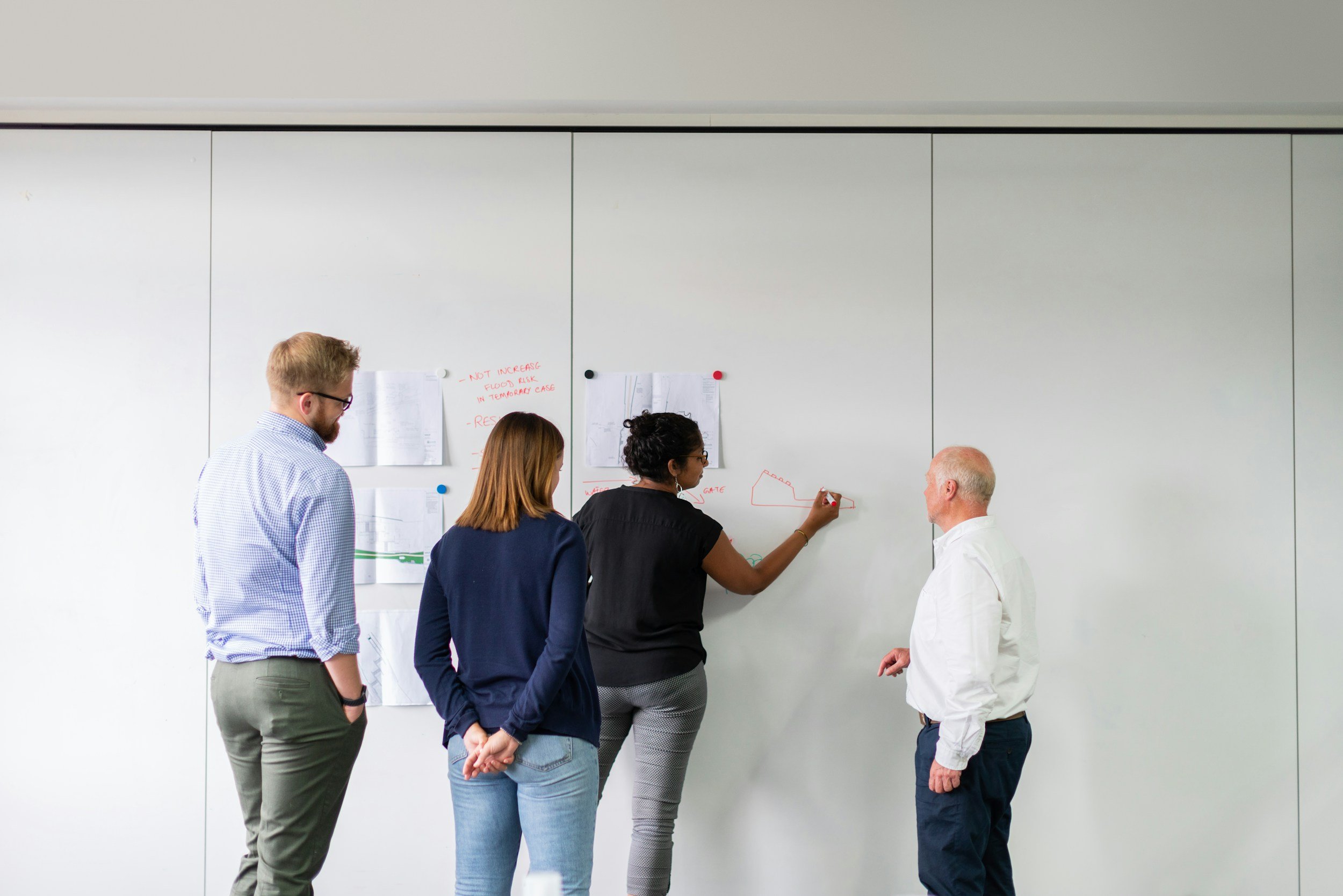
Burn more calories and improve team dynamics by utilising standing meetings.
Prescription: 15–20 Minutes For Time (Hard Cap)
Equipment: Zero chairs. High focus. (Remote athletes: a breakfast bar, kitchen worktop, or high windowsill).
At Wise Corp, we treat the working day as an opportunity to be healthier. And right now, the modern office—and the home office—has a severe fault, the chair.
Endocrinologist Dr James Levine of the Mayo Clinic—the pioneer of Non-Exercise Activity Thermogenesis (NEAT)—famed for his observation that "sitting is the new smoking", points out that prolonged sitting shuts down the body’s metabolic engine. It slumps the spine, switches off the glutes, and tanks cognitive output.
This weeks’s Work In of the Week fixes the fault. We are taking the standard sit-down meeting and scaling it up to a functional, upright movement: The Standing Meeting.
The Science & The Stimulus
Why stand? Because physiology drives psychology.
Speed & Efficiency: A landmark study by Professor Allen Bluedorn and his colleagues at the University of Missouri found that sit-down meetings last 34% longer than standing meetings—yet produce zero improvement in decision-making quality. Standing strips away the waffle and forces intensity.
Metabolic Output: Research led by Professor John Buckley at the University of Chester showed that switching from seated to standing office work reduces post-meal blood sugar spikes by 43% and burns an extra 0.83 calories per minute (roughly 174 extra calories over an afternoon).
Team Dynamics: Organisational behaviour professors Andrew Knight and Markus Baer at Washington University in St. Louis tested standing versus seated teams. Using biometric sensors, they proved that standing meetings trigger greater physiological arousal (excitement) and dramatically decrease "territoriality" over ideas—leading to much stronger collaboration and information sharing.
The Execution (Points of Performance)
Treat a standing meeting like a sprint, not a marathon. Whether you are in HQ or dialling in from home, here is how to execute the movement with proper form:
The Set-Up (In the Office): Clear the chairs away from the table, or gather around a high bench or whiteboard.
The Set-Up (Dialling in Online): No standing desk? No excuse. Improvise your workstation. Relocate your laptop to a kitchen breakfast bar, a high windowsill, a chest of drawers, or an ironing board cranked to the top notch. Prop your screen on a couple of thick books so the camera is near eye level—saving you from rounding your neck ("tech neck")—pop your headphones in, and step back slightly so you have room to move.
Stance & Mechanics: Stand with your feet hip-width apart. Keep a soft bend in the knees (never lock out your joints), brace your core lightly, and keep your chest tall. Shift your weight naturally from foot to foot to keep blood pumping through the lower limbs.
The Time Cap: Set a strict 15-to-20-minute time cap. Standing meetings are designed for sharp updates, problem-solving, and rapid consensus—not two-hour slide decks. State the objective, execute the decisions, and call "Time!"
The Habit Anchor
New habits fail when they don't have a trigger. Don't just vow to "stand more." Anchor this intervention to a cue you already do every single day:
The Anchor: Short meetings. Status updates, check ins.
The Rule: The moment your 5-minute calendar reminder pings—or right before you click "Join Call"—grab your laptop, move to your breakfast bar or windowsill, and get on your feet. Make that calendar ping your starting buzzer: 3, 2, 1... Stand.
(Scale as needed: If team members have mobility issues or injuries, adapt the movement so everyone can participate comfortably.)
Drop a photo of your improvised home standing setup—or your team's meeting time-cap results—in the comments below. Let’s get to work!
Sources & Further Reading:
Bluedorn, A. C., Turban, D. B., & Love, M. S. (1999). The effects of stand-up and sit-down meeting formats on meeting outcomes. Journal of Applied Psychology. Read the study via ResearchGate
Buckley, J. P., Mellor, D. D., Morris, M., & Joseph, F. (2014). Standing-based office work shows encouraging signs of attenuating post-prandial glycaemic excursion. Occupational and Environmental Medicine. Read the study via ResearchGate
Dempsey, P. C., et al. (2016). Breaking up prolonged sitting with standing or walking attenuates postprandial glycemia. Diabetes Care. Read the study at Diabetes Journals
Knight, A. P., & Baer, M. (2014). Get Up! The effects of non-sedentary workspace design on team information elaboration and performance. Social Psychological and Personality Science. Summary via Washington University in St. Louis
Levine, J. A. (2015). Sick of sitting. Diabetologia. Read via Mayo Clinic Pure