
WC 280926
Happy International Poke Day! Today we celebrate the vibrant, fresh flavors of this traditional Hawaiian dish. Originating centuries ago as a practical, nourishing snack for native Hawaiian fishermen, poke (meaning "to slice" or "cut crosswise") was traditionally made from raw reef fish seasoned with sea salt, seaweed, and crushed kukui nuts. Over time, it has evolved into a global culinary staple, incorporating influences like soy sauce and sesame oil.
Beyond its delicious taste, poke is a nutritional powerhouse. It offers a fantastic source of lean protein and heart-healthy omega-3 fatty acids from fresh fish, which support brain function and reduce inflammation. When paired with fresh vegetables and whole grains, it becomes a perfectly balanced meal that is as good for your body as it is for your taste buds.
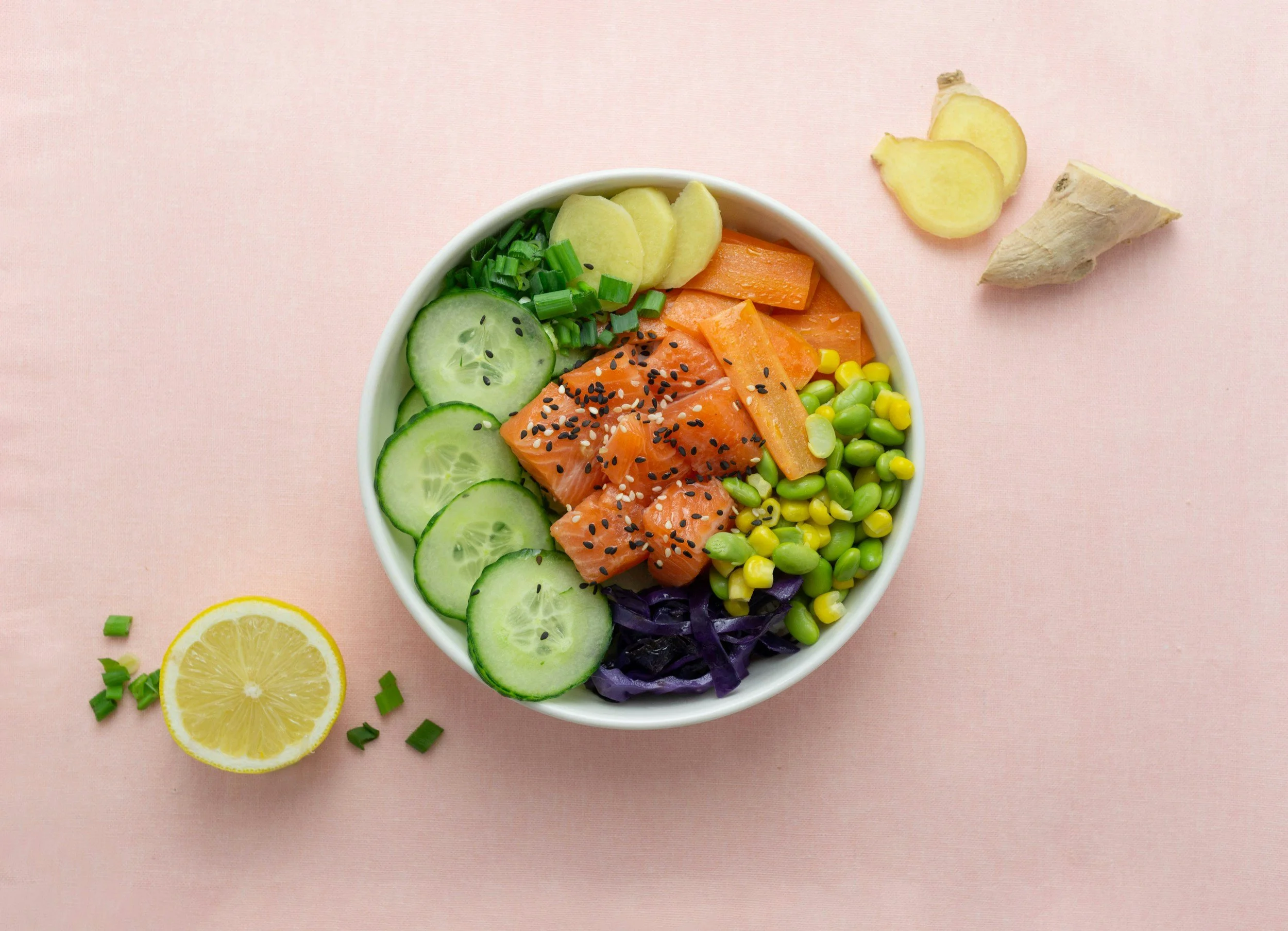
International Poke day is 28th September, a tasty and extremely healthy alternative to UPFs
Air Squat drink break
Prolonged occupational sitting is an independent risk factor for cardiovascular disease and all-cause mortality, even for individuals who exercise regularly outside of work hours.
1. Reversing the Metabolic Drag
A major cohort study published in JAMA Network Open tracked over 480,000 individuals over 12 years and found that individuals who predominantly sit at work experience a 16% higher risk of all-cause mortality and a 34% higher risk of cardiovascular disease mortality compared to non-sitters.
Performing brief movement breaks interrupts this metabolic stagnation. A 2024 crossover trial demonstrated that performing short sets of bodyweight squats every 45–60 minutes during sedentary periods reduced post-meal blood glucose spikes by roughly 21%—outperforming a continuous 30-minute walk in acute glucose clearance www.turkjgastroenterol.org
The Mechanism: Large lower-body muscle groups (quadriceps, glutes, and hamstrings) act as primary glucose sinks. Contracting these muscles stimulates non-insulin-dependent glucose uptake via GLUT4 translocation, pulling sugar directly out of the bloodstream to use as fuel.
2. Preserving Joint Mobility & Spinal Alignment
Sitting forces the hip flexors into a shortened position, deactivates the gluteal complex ("glute amnesia"), and places sustained flexion stress on the lumbar spine. The air squat takes the hips through their full natural range of motion, lubricating the hip joints, strengthening the posterior chain, and maintaining functional squat depth essential for lifelong independence.
THE AIR SQUAT
The squat is a foundational human movement pattern. It is not an artificial exercise; it is the ultimate expression of core-to-extremity power and balance. Master these points of performance while your tea brews.
Key Technical Cueing
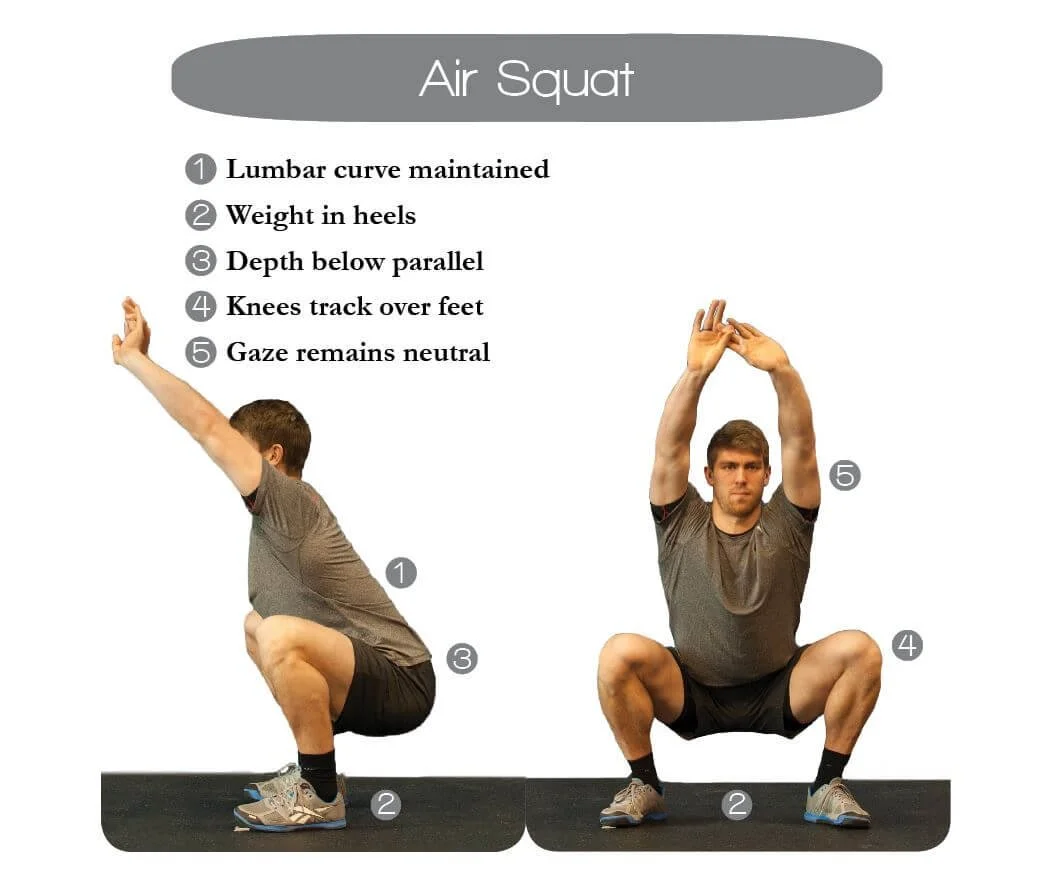
Setup: Stand with feet shoulder-width apart, toes pointing slightly outward (5 to 15 degrees) to allow the hips to drop cleanly between the ankles.
Initiation: The movement begins with the hips—not the knees. Push your hips back and down as if reaching for a chair behind you.
Torso: Keep your chest upright and maintain a neutral lumbar curve (no rounding of the lower back). Extend your arms out in front for balance if needed.
Tracking: Ensure your knees track directly inline with your toes throughout the entire range of motion. Do not allow the knees to cave inward (valgus collapse).
Depth: Lower your hips until the hip crease is below the top of the kneecaps (below parallel).
Completion: Drive through the mid-foot and heels to return to a standing position, finishing with full extension of the hips and knees at the top.
| Fault Observed | The Issue | The Correction |
|---|---|---|
| Knees Caving In (Valgus) | Weak glute activation, putting stress on the ACL. | Cue: "Push your knees outward over your pinky toes on the descent." |
| Weight Shift to Toes / Heels Lifted | Ankle mobility restriction or poor balance. | Cue: "Screw your feet into the floor and drive through your heels." |
| Loss of Lumbar Curve (Chest Collapse) | Poor thoracic extension or core disengagement. | Cue: "Keep your eyes locked on an eye-level target; arms up straight." |
| Muting the Hip / Shifting Knees Forward First | Initiating with knees instead of hips. | Cue: "Hips back first, then knees bend." |
Air Squat movement standard
"The Brew Micro-Break"
Time cap: Duration of the kettle boil (approx. 2–3 minutes)
15 Air Squats (Controlled tempo: 2 seconds down, 1 second up)
Rest a short time
15 Air Squats
Focus on flawless mechanics over speed. If your form breaks down, decrease the volume and prioritise depth and lumbar stability.
If you would like to read more on the benefits of air squats at work then take a look at our resources post.
ACADEMIC & SCIENTIFIC REFERENCES
Occupational Sitting & Mortality Risk:
Gao, W., et al. (2024). Occupational Sitting Time, Leisure Physical Activity, and All-Cause and Cardiovascular Disease Mortality. JAMA Network Open / PubMed Central.
Workplace Micro-Break Interventions:
Fang, L., et al. (2026). Micro-exercise breaks every hour: a feasible strategy to improve metabolic health in sedentary office workers. BMC Public Health / PubMed Central.
Metabolic & Ergonomic Impacts of Active Breaks:
Albulescu, P., et al. Active break program: an evidence-based review for the promotion of occupational health. PMC National Institutes of Health.